Arniston Attractions
Reading, sleeping, awesome ocean views, and during the winter months from March to October, Southern Right Whales can be spotted off the coast.
Amazing bird-life hanging out in the fynbos flora In the garden. South Africa's national bird, the Blue Crane, is also a possible sighting.
The quiet walking beach is approximately 150m away through the sand dunes; and Roman Beach for swimming, surfing, tanning, kayaking, etc, is a walk along the beach or along the road of approximately 600m.
Arniston Hotel is about 500m from The Deck and is open for Spa treatments or breakfast, lunch, or dinner. There is also a small but inviting visitors' shop stocked with beachside essentials (hats, sun lotion), and gifts and mementos of your time in Arniston.
Just beyond the Arniston Hotel are the white-washed cottages of the restored 200-year old fisherman's village (a National Monument). "Kassiesbaai" is the name of the fishing town, with traditionally thatched cottages.
Take a walk or bike ride up to the Water Tower, approximately 800m, from which you have a 360 degree view comprising the ocean, Arniston, and inland towards the town of Bredasdorp.
Waenhuiskrans (‘Wagon-house Cliff or Ledge'); go at low tide to gain access, and be sure not to stop in the ‘entrance hall' of the cave and think that you've seen it – go all the way in.
http://www.arnistonalive.org.za/
And walk another km or so further, and you will reach the Struispunt Beacon, although the town of Struisbaai would take a further 14kms of walking along uninterrupted white sand beach to reach.
Approximately 10kms from Arniston is the Test Flight & Development Centre of the South African Air Force, as well as the Overberg Test Range of Denel is situated here.
Arniston History
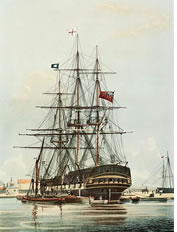
One of the biggest shipping tragedies took place here in 1815, when the troopship Arniston, carrying a large number of sick men en route from Ceylon to England, went down and 372 lives were lost. Only six men survived. The parents of four children who died in the wreck, placed a memorial stone at the scene of the tragedy. This memorial was later moved to a place near the beach, and the village also became known as Arniston.
The fishing hamlet on the outskirts of the village is called Kassiesbaai ('kassie' means 'wooden box'). Legend has it that lots of paraffin boxes washed up on the beach in earlier years. Residents built homes from these boxes and plastered them over with clay. Roofs were made of thatch. In later years, fishermen used sandstone for building. In 1975, a group of Capetonians started the "Save Arniston" project and they helped to restore these houses. Kassiesbaai, which was declared a National Monument, is very popular with artists and photographers.
Near Waenhuiskrans is the Struispunt beacon which was built at the beginning of the 1900s. It has a sandstone base with a huge bronze ball on top. This beacon serves as extra warning for ships and was built after the luxury liner 'Queen of the Thames' was wrecked on her maiden voyage. Visitors often walk to the beacon, five kilometres south of the village. When Waenhuiskrans was established in 1905, the fishing community applied for the protection of their fishing rights. This led to a 200 foot (66 metre) red line above the high water mark being registered. This unique servitude is still valid.
Overberg Air Show
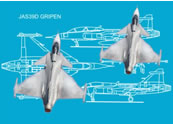
In April, the Overberg Air Show is hosted at the Air Force Base. " The air show is unique in the sense that it is the only air show in SA where the public has the opportunity to witness a SA Air Force Capability Demonstration with live weapon delivery from fighter aircraft and helicopters. Shows generally include Jet aircraft such as the Gripen and Hawk, and Oryx, Rooivalk and Agusta helicopters, as well as the SA Air Force Astra Aerobatic Team - the Silver Falcons. Civilian Fire Bomber aircraft usually also demonstrate their efficacy at fighting fires by dropping water on burning objects. A number of ex-military aircraft (including fighters) and specialised civilian aerobatic aircraft are put through their paces during the day." http://flyin.org.za/
Bredasdorp
The town of Bredasdorp is 24kms from Arniston. Here you will find the only Shipwreck Museum in South Africa (6 Independent Street – Tel: 028 424 1240). Although Bredasdorp is a small town, you will find both SPAR and Checkers supermarkets, a Clicks shop, and a number of coffee shops and restaurants. The town is also the location of the offices of Kapula Candles, an international candle company that exports hand-painted candles to Europe and the United States. You'll find frost-painted candles, hand-painted candles, and hand-painted ceramics (13 Cereal Street, Bredasdorp – Tel: 028 424 2829). www.kapula.net
The Heuningberg Nature Reserve is home to the Bredasdorp Lily. The Heuningberg Nature Reserve, set on the slopes of Heuningberg (Honey Mountain), south east of Bredasdorp, is over 800 hectares and boasts over 300 plant species as well as more than a few endemics including the trident pincushion and the red Bredasdorp lily, which bursts into flower in March and April every year.
There are two hiking trails in the reserve, both with rather humdrum names: the white and yellow routes. However, that is where boring ends, as the white trail, which includes the amazing Lot's Wife rock formation on Heuningberg, winds along the slopes of the Drinkwaterkloof to the watershed, after which it continues above Uitvlugkloof before meeting up with the yellow route.
The yellow route contours around the northern slopes of Heuningberg to yet another rock formation, the Pulpit rock, followed by an ascent to the plateau. Look out for giant proteas (South Africa's national flower is the King Protea) on the slopes of Preekstoel (‘Pulpit') Mountain.
Both trails offer incredible views not only across Bredasdorp but also of Arniston, De Hoop Nature Reserve and south to Struisbaai.
Bredasdorp is also host to the Caltex Foot of Africa Marathon and Half-Marathon which has been, uh, running, for 30 years and happens annually, in October.
Look out for the Bredasdorp Motor Club Car Race Club whose season is from September to June. Visit their website: www.bredasdorpmotorklub.com, or follow them on Facebook for up-to-date event information.
De Mond Nature Reserve
23kms from Arniston is De Mond Nature Reserve. This nature reserve is 954ha in size, with a variety of plant and bird life, as well as animal life. The naturally shifting sand dunes have been stabilised with indigenous vegetation; coastal vegetation ranges from dune milkwood forests to saltmarshes that sustain the estuarine environment; further inland, dune fynbos borders limestone fynbos heathlands. The reserve is popular among bird enthusiasts; birds of the area include breeding colonies of the threatened Damara and Caspian terns; the rare African black Oystercatcher also favours the reserve; Blue cranes, another rare and endangered species, occasionally breed in this area. Activities in the reserve include mountain biking, freshwater and marine angling, picnic sites for day visitors, as well as overnight accommodation. http://www.capenature.co.za/reserves.htm
Napier
Napier is a village at the foot of the Soetmuisberg, between Caledon and Bredasdorp. It is 40kms from Arniston. A blend of century-old cottages and modern houses, surrounded by the rolling farmland which typifies the Overberg region of South Africa, give the village a rural atmosphere.
Napier was founded in 1838 through a dispute between two neighbours, Michiel van Breda & Pieter Voltelyn van der Byl, over the location of the community church. Michiel van Breda wanted the church sited on his farm, Langefontein, while Pieter Voltelyn van der Byl wanted it built on his property, Klipdrift. Neither van Breda nor van der Byl would give way, so churches were built in both places, the town of Bredasdorp growing around van Breda’s church and the town of Napier founded around van der Byl’s church, and being named after Sir George Thomas Napier, the British governor of the Cape Province at that time. The Dutch Reformed church was built in the form of a Greek cross with teak interior, and is unique with a beautiful pipe organ made of solid yellow copper.
Local attractions include a toy museum and a watermill, a giant sundial at the municipal offices, and an ox Wagon monument (Kakebeenwa) to commemorate the Ossewa Trek of 1838. The sundial was erected by Danie du Toit in 1965, who had no training in this field but gained his knowledge through meticulous observation. Time can be read from it, accurate to within 30 seconds.
In the past, Napier's main craftsmen were blacksmiths, a heritage which is commemorated by the annual Horse and Cart Festival. Other annual events are the Patatfees (Sweet Potato Festival), every June, and the Voet van Afrika (Foot of Africa) Marathon which is run in mid-September. www.overberg.co.za
Cape Agulhas
43km from The Deck – 6kms from Arniston is a turn off towards L'Agulhas – L'Agulhas, also known as Cape Agulhas, is the Southern-most tip of the African continent and is the official meeting point of the two oceans, the Atlantic and Indian. Here you can explore the Lighthouse Museum, which dates back to 1848 and is the second-oldest working lighthouse in South Africa. L'Agulhas means ‘the needles' in Portuguese and two theories suggest explanations that the name is due to a discovery made by seafarers that compass needles show no variation between true north and magnetic north points in this area. The second theory is that the name apparently also refers to the jagged, slanting ‘needle-like' rocks that project from the surf offshore. A useful webpage for events in the area is www.discovercapeagulhas.co.za/events or check out their Facebook page.
Elim
57km from The Deck – the village of Elim is a National Monument, in its entirety; it is inhabited only by members of the Moravian Church. It is a tiny, quaint, and quiet village to drive through, but be aware that the drive to the village from Arniston is entirely on untarred roads, so a vehicle with high clearance is most advisable. It is possible to drive through Elim on the way to Hermanus and Cape Town, but the route will be ‘dirt' roads and regional roads, not the National road. The old Watermill at Elim was built in 1838 and was recently restored. The wooden wheel is the biggest in the country. Today the mill still grinds wheat with stone-grinders. In August there is the annual ‘Love Feast' when the whole congregation is treated to tea and bread rolls. The bakery is an important stopover; stone-ground flour from the Watermill is used to bake delicious bread, cookies, pies, and more. The flower-shed is also worth a visit.
Try out the Black Oyster Catcher restaurant in the Elim area. "We serve fresh produce that grows in our own garden as the seasons dictate. As a result, we offer an organic dining experience, set in a relaxed country atmosphere. Here fresh food, complementing our boutique wines, is prepared to order and enjoyed at leisure. Our menu is not set and changes as the season does. We bake fresh bread daily. The kitchen is open 6 days a week from 11:00 till 14:30 (closed Mondays). Wine tastings is available from 10:00 till 14:30. The Restaurant is wheelchair friendly." Tel: 028 482 1618 Email: venue@blackoystercatcher.co.za http://www.blackoystercatcher.co.za/restaurant.html and find them on Facebook
De Hoop Nature Reserve
82kms from The Deck - The De Hoop Nature Reserve is approximately 34 000 ha in size and one of the largest natural areas managed by Cape Nature Conservation. It is a favourite destination for hikers, cyclists, bird watchers and during the winter and early summer months, whale watchers. The entire length of the De Hoop coast is a marine protected area, one of the largest in Africa. Fishing is not permitted in this area and visitors may not disturb or remove marine organisms. The marine protected area extends three nautical miles out to sea and at De Hoop you are likely to see the finest examples of inter-tidal ecosystems in the Western Cape. Snorkelling in large, clear rock pools is one of the best ways to appreciate the inter-tidal world at De Hoop.
The De Hoop Nature Reserve area encompasses the breeding grounds of the southern right whale. It is estimated that about 120 individual whales return to the waters of De Hoop every year to calve and mate. The sight of these massive mammals leaping out of the water or simply wallowing in the azure waters is surely one of the highlights of a visit to De Hoop. The high dunes at Koppie Alleen are an excellent vantage point for whale watching. Whale season is between June and November every year with peak viewing months between August and September.
The adjacent De Hoop Marine Protected Area, which extends three nautical miles (5 km) out to sea, is one of the largest marine protected areas in Africa and provides a sanctuary for a vast and fascinating array of marine life. De Hoop Nature Reserve is situated east of Bredasdorp, approximately 260 km from Cape Town. The reserve may be approached from either Bredasdorp or Swellendam. The last 50 km of either route is along gravel roads.
A typical Mediterranean climate prevails in the region; summers are warm and winters mild. The annual rainfall is about 380 mm and August is usually the wettest month. Sea mists also occur. The most frequent summer winds are east, west and southeast, while westerly and southwesterly winds prevail in winter.
De Hoop Nature Reserve forms part of the world's smallest and most threatened plant kingdom - the Cape Floral Kingdom. Fynbos is the dominant vegetation group and is largely confined to nutrient-poor soils in the winter rainfall areas of the Western Cape. It is adapted to fire and drought and is defined by four growth forms: proteas, ericas, restios and geophytes. De Hoop Nature Reserve is important for the conservation of lowland fynbos for it has the largest conserved area for this rare vegetation type. The Bredasdorp / Agulhas and Infanta area has an estimated 1500 plant species of the approximately 9 000 species found in the Cape Floristic Region. Of these 1 500 species: 108 species are rare or threatened, 34 species only occur on De Hoop Nature Reserve and nowhere else, and 14 species were recently discovered and are still undescribed.
De Hoop's many terrestrial habitats support a diversity of animal groups. The marine environment is likewise home to a variety of life forms. The reserve has 86 mammal species. Most notable are the rare bontebok and Cape mountain zebra, as well as eland, grey rhebuck, baboon, yellow mongoose, caracal and the occasional leopard. Marine mammals such as dolphins and seals occur in the waters off the coast and southern right whales calve and mate in the sheltered bays of De Hoop each year between May and December. At least 250 species of fish occur in the marine protected area.
De Hoop is famous for its variety of resident and migratory birdlife and more than 260 species have been recorded on the reserve. The De Hoop Vlei attracts large numbers of water birds. The only remaining breeding colony of the rare Cape vulture in the Western Cape occurs at Potberg. http://www.sa-venues.com/game-reserves/wc_dehoop.htm http://www.capecountryroutes.com/go/accom/edenroute/dehoop/index.shtml
Gansbaai
Gansbaai is home to Great White Shark cage-diving and surface-viewing. We don't know this company ourselves, but they have good reviews on TripAdvisor: Great White Shark Tours or find them on Facebook
Cape Garden Route

Spanning from Cape Town to Port Elizabeth, the Garden Route is an incredibly scenic part of South Africa. From the semi-desert of the Karoo and forests of Tsitsikamma to pretty seaside towns and white sandy beaches, it is the ideal destination for just about anyone, from families to honeymooners. Most travellers start their Garden Route trip from Cape Town although it is just as easy to start in Port Elizabeth. It's the perfect place for a road trip - the ideal self-drive destination with good roads, easy access and a range of highlights to keep you entertained. Part of the route's beauty is attributable to the protected Fynbos (fine bush) flora that is synonymous with the Garden Route.
The first section of the Garden Route is known as the Whale Route & the Overberg. Southern Right Whales visit South Africa's shores to calve, and this section of coast offers great land-based whale watching. Route 62 takes you through the Little Karoo, and is home to some of South Africa's most breath-taking mountain passes. The Coastal Route runs from Mossel Bay to Port Elizabeth past spectacular beaches, concluding in an area rich in malaria-free Game reserves where you may view the Big Five animals.
Arniston is an especially good base from which to explore the Whale Route & Overberg – it is 80kms from the protected marine reserve, De Hoop Nature Reserve, where the Southern Right Whale returns annually to breed. Yet, Arniston is not as busy as some of the well-known whale-watching areas, and so offers a quiet respite from which to explore at your leisure.